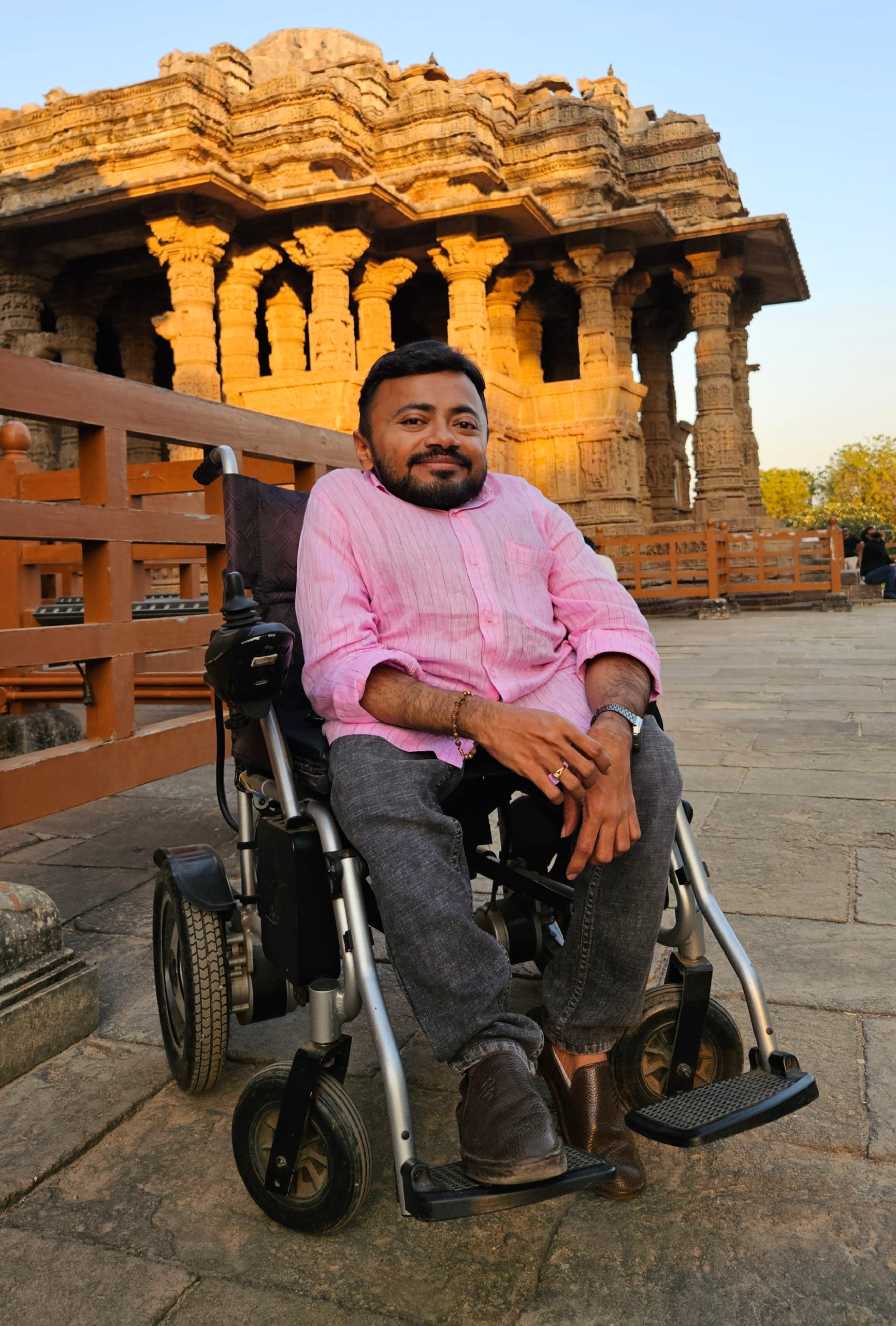
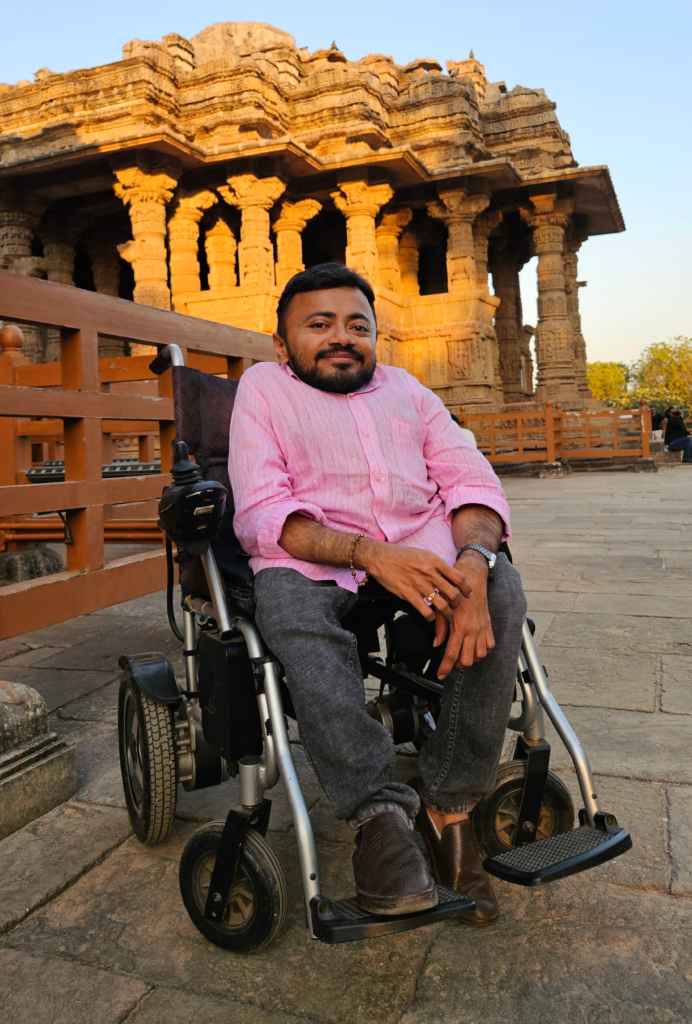
Kashyap Trivedi was born in 1991 with fractures in his wrist and pelvic joint. Within a day of returning home, his parents had to rush him back to the hospital, where he was diagnosed with Osteogenesis Imperfecta (OI), a rare genetic condition his family had never heard of before.
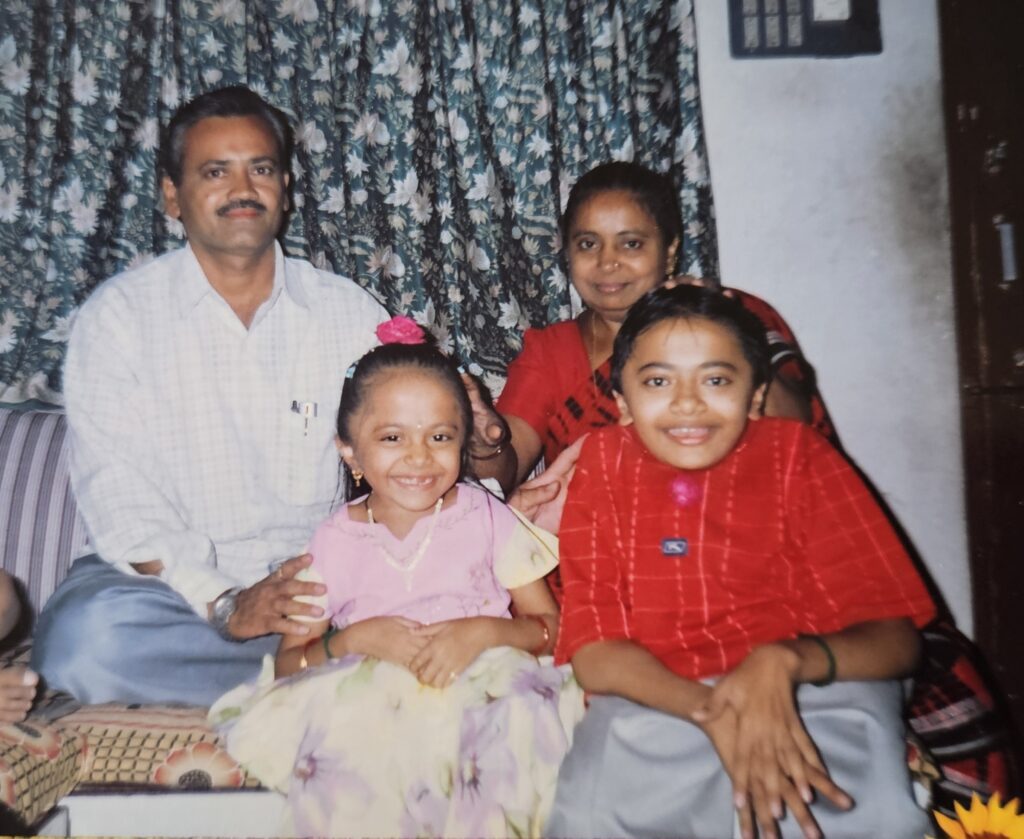
At the time, they were living in Jafrabad, a small town with limited medical facilities. Every fracture meant traveling 30 to 40 kilometers for treatment. There was little awareness about OI, minimal medical guidance, and no structured support systems. Soon after, Kashyap’s younger sister was also diagnosed with OI, doubling the emotional and physical challenges for the family.
Despite having no roadmap, his parents approached the situation with determination and unwavering care. Schooling was often interrupted by fractures. Some minor fractures were managed at home with careful bandaging. As he grew older, Kashyap developed scoliosis and chest deformities, complications no one had prepared them for. Social challenges followed. He faced stares, ridicule, and even school rejections due to accessibility concerns.
Gradually, caution became second nature. Fear quietly entered his life.
Until his mid-teens, Kashyap used a children’s tricycle as his mobility aid because the only wheelchairs available were heavy hospital models. Often, his father carried him wherever he needed to go. Independence felt distant.
Loss, Treatment, and a Turning Point
In 2011, a television news feature introduced the family to Dr. Atul Bhaskar, an orthopaedic specialist in Mumbai working with children with OI. For the first time, Kashyap and his parents received clear guidance about the condition, including rodding surgeries and medical management through bisphosphonate therapy.
However, during this period, tragedy struck. Kashyap’s sister suffered repeated fractures and eventually severe cervical spine compression. In 2014, the family lost her. The loss was devastating and left them emotionally shattered.
Soon after, Kashyap began his own surgical treatment. Rods were inserted into his leg bones, bringing something he had rarely experienced before, physical stability. His fractures stopped. For the first time, he could stand and slowly begin walking.
With medical clarity came emotional strength. He began using a wheelchair more confidently and embraced mobility as empowerment rather than limitation.
“A full life is not about being fracture free. It is about living with purpose, confidence, and hope.”
That phase marked a powerful shift, from survival to aspiration.
Discovering Creativity and Purpose
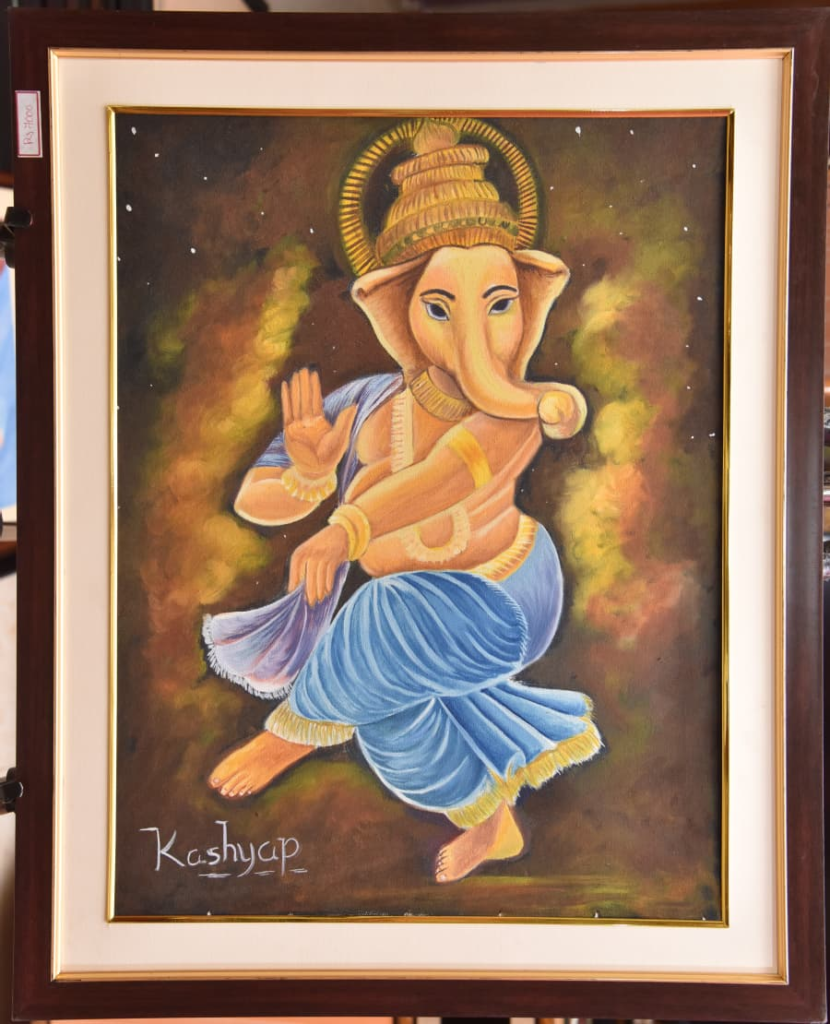
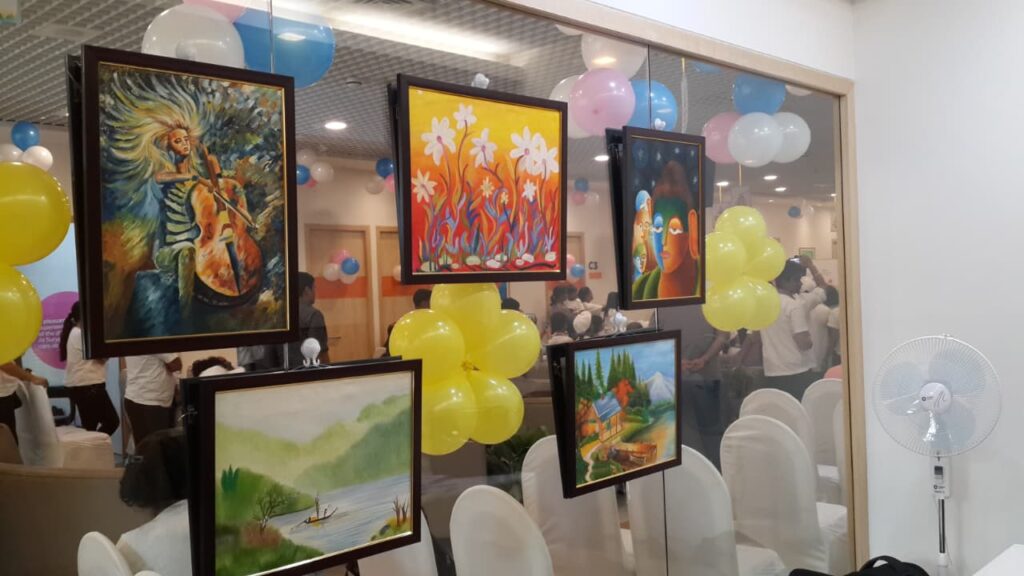
Art and music had quietly entered Kashyap’s life much earlier. Encouraged by his father, he began learning music in childhood. Painting began as a shared activity with his sister and eventually became a deeply personal form of expression.
Following one of his surgeries, the hospital organized a Children’s Day exhibition featuring his and his sister’s artwork. The appreciation he received there changed something within him. For the first time, he began to see creativity not just as comfort, but as direction.
Having experienced accessibility barriers throughout his life, he developed a sharp sensitivity to how environments are designed and how poor design excludes. This insight led him to pursue a Master of Design at the National Institute of Design, Ahmedabad.
At NID, his lived experience became perspective. He began exploring inclusive and accessible design with personal conviction. He was no longer just navigating systems. He was preparing to improve them.
Music and painting continue to anchor him emotionally.
“When art becomes part of your life, you never feel alone.”
Creativity, for him, is not a hobby. It is resilience in motion.
Independence on Wheels
Stability after surgeries brought a new hunger for independence. Kashyap transitioned to a compact wheelchair and gradually began stepping into public spaces with confidence. Supportive friends played a big role in dissolving his initial hesitation.
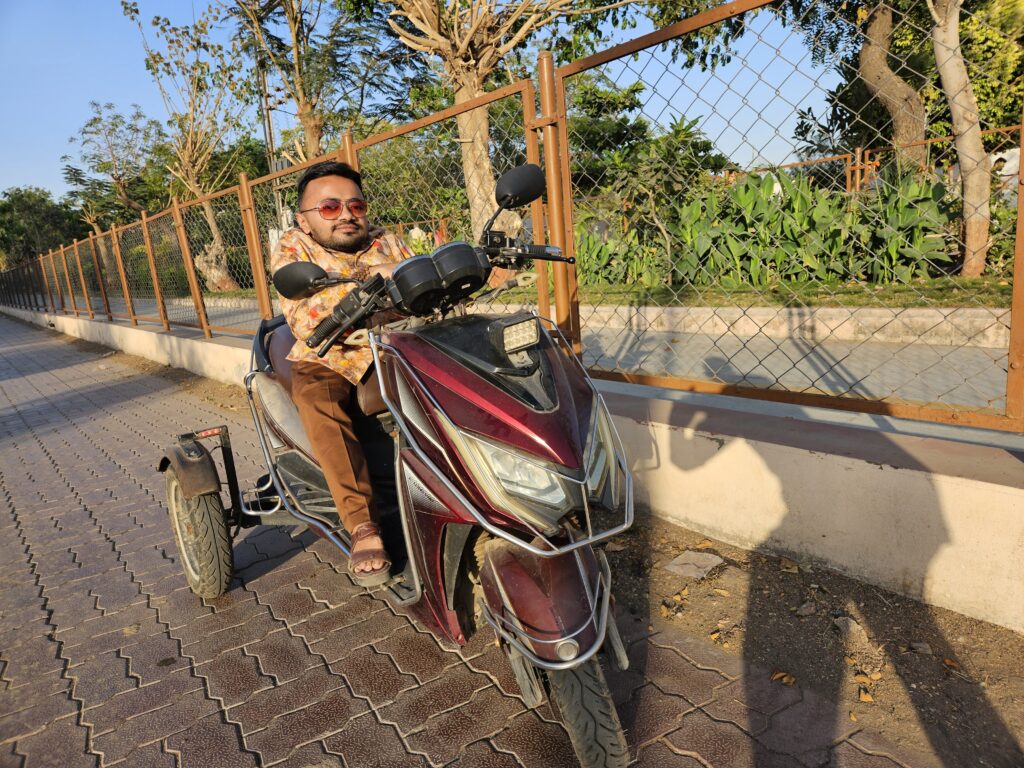
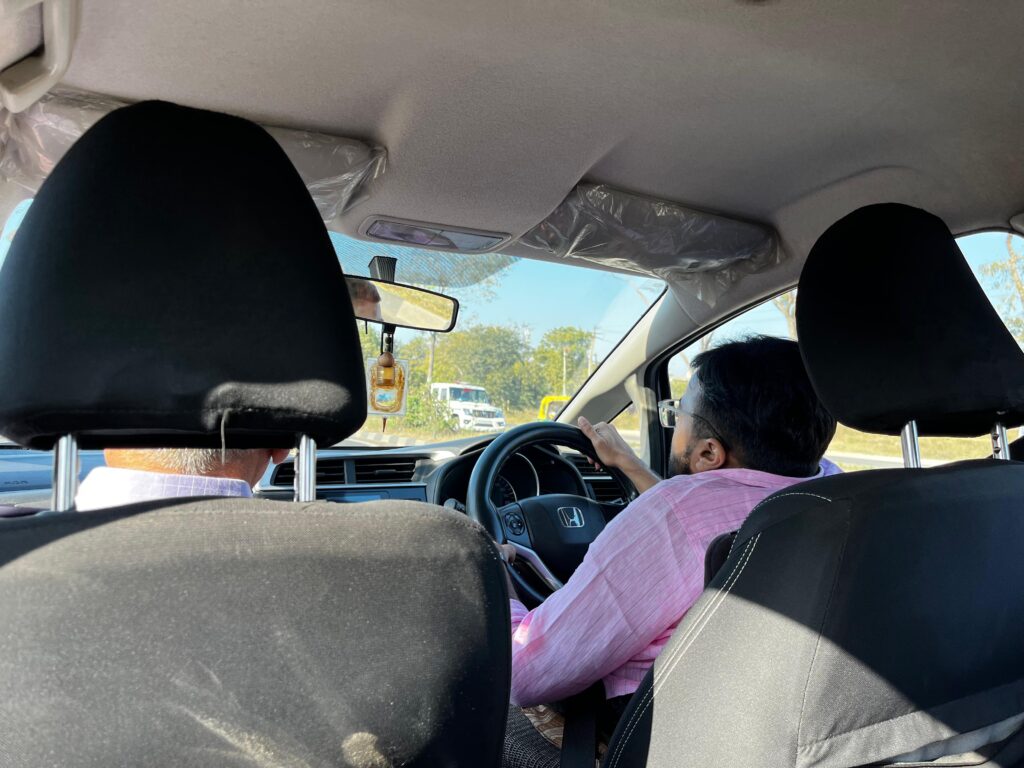
Driving became his symbol of freedom. He began with a modified scooter fitted with side wheels and later, in 2018, upgraded to a modified car. Today, long drives are his therapy.
Driving represents more than mobility. It represents agency.
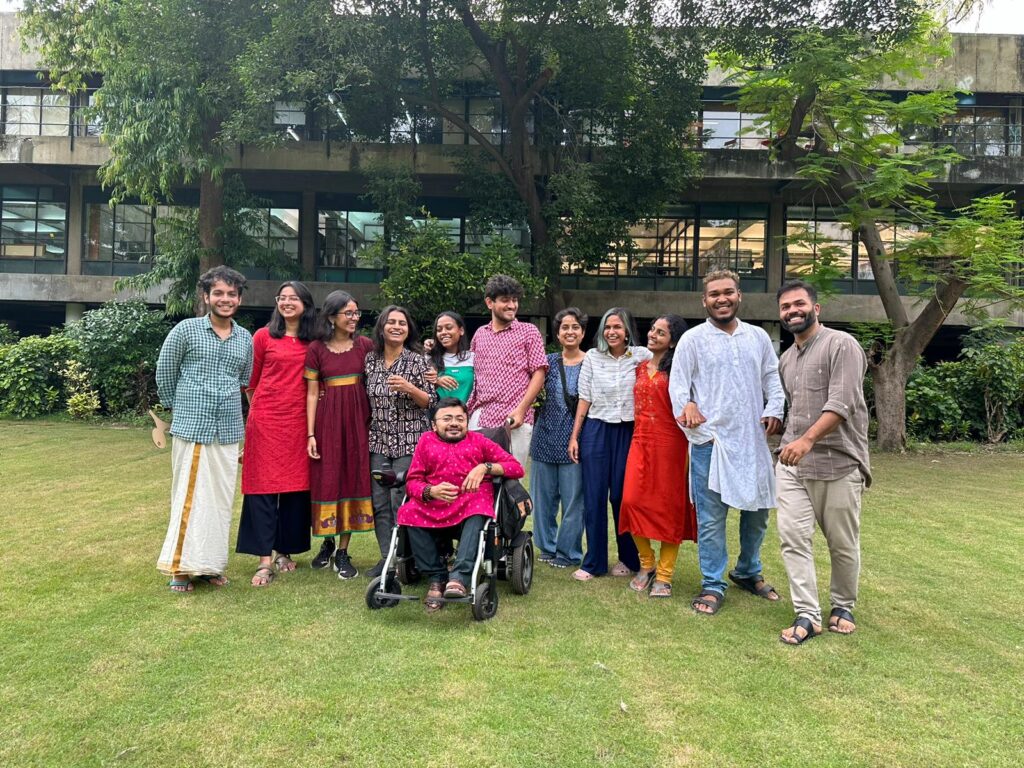
Today, Kashyap is actively pursuing his internship and academic projects at NID. On campus, he uses a power wheelchair and manages most aspects of his routine independently. His father supports him with commuting, but his daily life is defined by self-reliance.
He balances academics, creativity, friendships, and family life with quiet determination.
Resilience, Support, and Giving Back
In 2021, Kashyap lost his mother. It was another deeply painful chapter. For a year, he struggled with grief and demotivation. During this time, his father became his pillar of strength, encouraging him to continue pursuing his education and supporting their move to Ahmedabad.
Spiritual faith has also played a grounding role in his life, helping him find inner steadiness during turbulent moments.
When asked what he is most proud of, Kashyap does not name awards or milestones. Instead, he speaks of gratitude for his parents who centred their lives around their children’s well-being, for compassionate doctors, supportive friends, and mentors who treated him with dignity and belief.
He strongly believes that structured community platforms and support groups can dramatically change outcomes for families living with OI. In his early years, information and awareness were scarce. Today, he advocates for greater access to medical guidance, emotional support, and shared platforms that ensure no family has to navigate OI alone.
Looking ahead, he aspires to work in the fields of accessibility, OI awareness, and community building, transforming lived struggle into collective strength.
A Message of Hope
To children and young adults living with OI and to parents wondering whether a full life is possible, Kashyap offers reassurance rooted in lived experience.
Yes, life with OI has challenges. Yes, it requires caution and resilience. But it does not mean life must be limited.
With timely medical guidance, informed decisions, creativity, supportive communities, and belief in oneself, it is possible to study, work, create, travel, and build meaningful independence.
A meaningful life is not defined by physical perfection. It is defined by courage, support, and purpose.
And that life is absolutely possible.