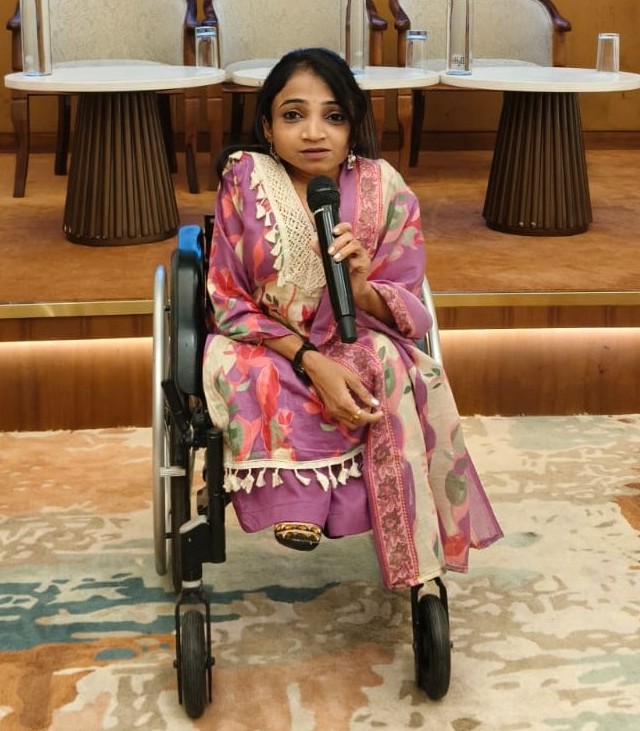
From the day she was born, people focused on what Dr. Anchal would never be able to do. She spent the rest of her life proving them wrong. She was only one or two months old when she fractured her arm for the first time. Her parents thought perhaps she had been held incorrectly. Then it happened again. And again. Every few days, another fracture. Doctors eventually diagnosed her with Osteogenesis Imperfecta (OI). Her parents were told to handle her like a “glass doll”. They were advised to keep her lying in one place and protect her from even the smallest movement. That was how Anchal spent much of her childhood.
While other children played outside, she watched from a distance. She wanted to go out, play and talk to other children, but the fear of another fracture kept her at home. Then came years of hospitals and surgeries. She underwent around 15 to 16 surgeries, mainly on her legs. Birthdays and festivals were often spent in hospital. Once, she even fractured her leg while lying in a hospital bed. It was a painful childhood. She still finds it difficult to talk about those years without emotion.
After years of treatment and little improvement, her family stopped the surgeries. Anchal began to accept her condition. She had no idea then what her future would look like. She only knew that she had to keep going.
Fighting for a place in school
Education was another struggle. Her parents eventually found a school for children with disabilities. Anchal studied there until Class 5. Then the school had nothing more to offer. For the next four to five years, she could not find another school willing to admit her. School after school refused. They were worried about her disability and said her parents would have to take responsibility for anything that happened to her. Anchal stayed at home, but she never lost her wish to study.
When her family moved to a new area, her mother began approaching schools again. Anchal was then around 17 or 18. One school refused to even consider her because of her age. Her mother asked them to meet Anchal before making a decision. They did, and Anchal was finally given a chance. The school, however, was not accessible. There were no facilities for students with disabilities. She was probably the only wheelchair user there. After spending years at home, she was shy and withdrawn. Students from other classes would gather around her, stare and tease her.
Even going to the washroom was difficult. Her mother came to school at lunchtime to help her. The situation became so uncomfortable that the school administration accused Anchal of disturbing its routine and threatened to remove her. She and her family refused to give in. Anchal slowly learned to manage on her own. She kept studying. While in Class 7, she also appeared for her Class 10 examination through the National Institute of Open Schooling (NIOS). When she passed, it was one of the happiest days of her life. The marks were not what mattered. She knew what it had taken to get there. She completed Class 12 through NIOS in 2012.
“I had to prove that I could do something”, says Anchal, as she had by then heard enough opinions about her future from others. People told her that her life would be miserable. They questioned whether she would ever marry or work. Some even said it would be better if she were not alive. Those words stayed with her. But they did not stop her. She did not know exactly what she wanted to become. She only knew that she wanted to do something that would change the way people saw her.
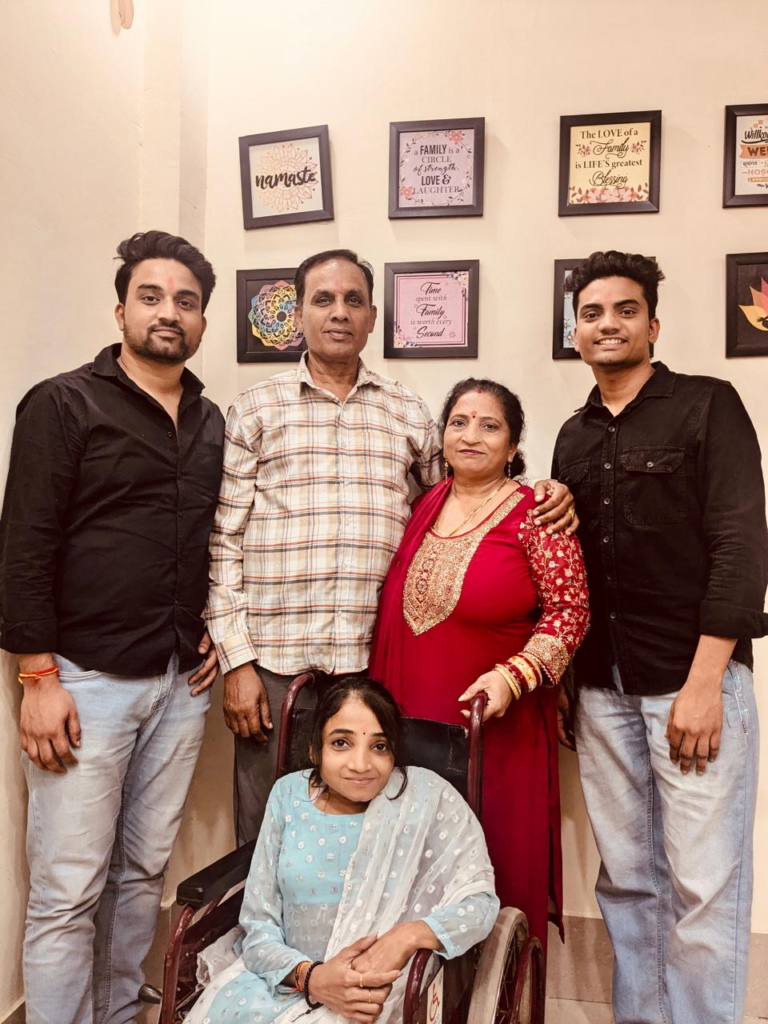
Her parents gave her the support she needed to keep moving. Her younger brother and a few friends she made during college also stood by her. For the first time, she experienced friendships in which she was treated as an equal.
From a wheelchair to a PhD
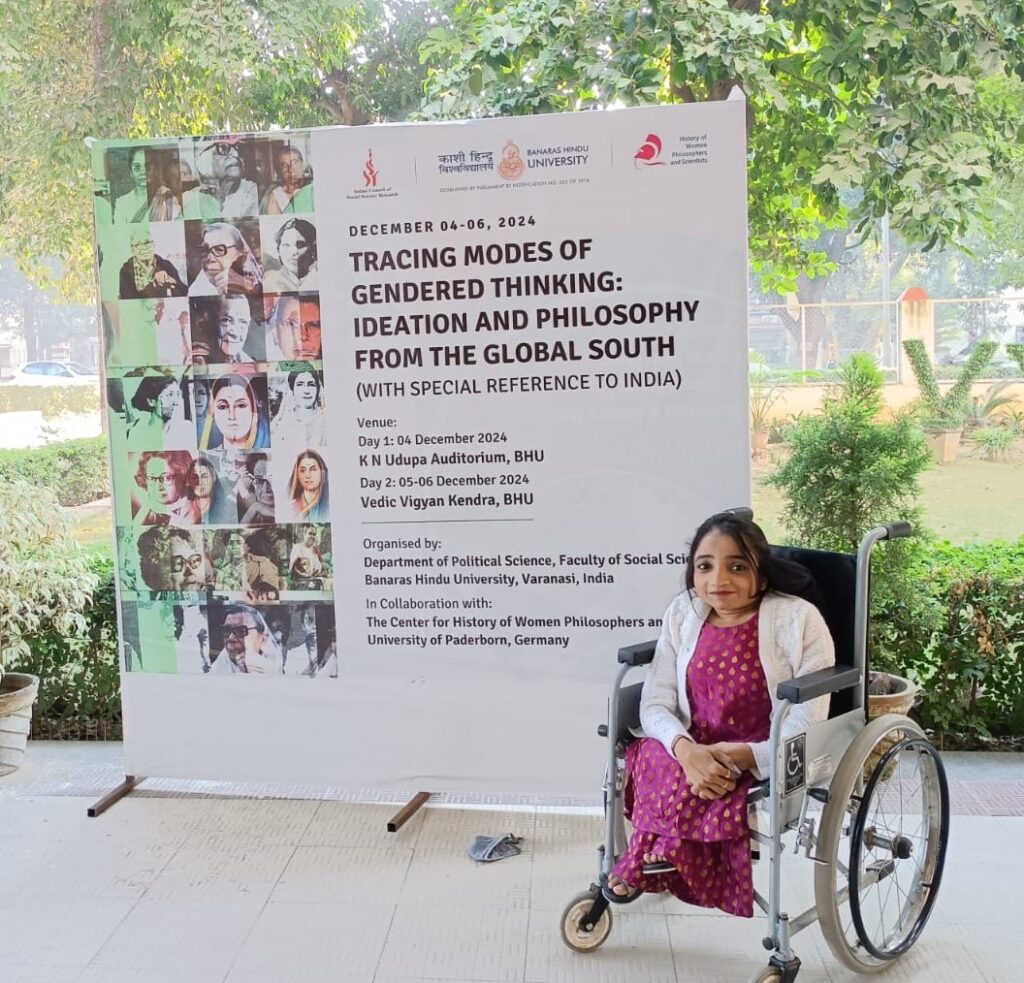
In 2013, Anchal joined a regular college to study Political Science. Getting to college every day in a wheelchair was difficult. Accessibility was poor. People stared. There were days when even basic needs, such as using a toilet, became a challenge. She continued. She completed her BA in Political Science in 2016, her MA from IGNOU in 2019 and qualified for the UGC NET/JRF in 2020. In 2021, she entered Banaras Hindu University for her PhD.
She chose disability as her area of research because she wanted her academic work to make a difference to others with disabilities. Her research and conference presentations took her to different parts of India. She wrote about accessibility, inclusive education, women with disabilities, disability rights and artificial intelligence. In 2026, she completed her PhD on the effectiveness of the reformative aspects of the Rights of Persons with Disabilities Act, 2016, with reference to persons with disabilities in Shahdara district, Delhi. Today, she works as a Guest Lecturer in Political Science at NCWEB, University of Delhi. For Anchal, becoming a lecturer is more than a professional achievement. She wanted to challenge the idea that people with disabilities have limited career choices. “We can enter and excel in any field,” she says.
Learning to accept herself
Accepting her own body was another journey. As a woman with OI, Anchal grew up with the same social expectations placed on every girl—to look a certain way, to be “beautiful”, to fit an idea of what a woman should be. Her short stature and physical differences often drew attention. People would stare or react with shock when they saw her. Over time, Anchal stopped allowing those reactions to define her. Today, she says she is proud of who she is, including her disability. Anchal always wanted her identity to be known by her name, not by her disability. Today, she has fulfilled that wish.
She still faces barriers when she goes out. Accessible toilets are difficult to find. Public transport is rarely wheelchair-friendly. Auto and cab drivers sometimes refuse to take her. Yet she travels independently. When people see her moving around on her own, they sometimes treat it as something extraordinary. For Anchal, it is simply life.
Her message to families living with OI
Anchal has one strong message for parents of children with OI: do not isolate your child. Let them experience the world. Let them meet people, learn, make choices and discover what they enjoy. Teach them to accept themselves and encourage them to pursue whatever interests them. Technology can help too. Anchal uses an electric wheelchair, which gives her greater independence and mobility.
To young people with OI, she says: do not measure your life against someone else’s timeline. Disability can delay education, work and other goals. That does not mean you have failed. Move at your own pace. Keep trying. One day, you will look back and understand how far you have come.
Anchal’s life began with people telling her what she could not do. Today, she is a PhD holder, researcher and lecturer. She has travelled to many Indian states, presented her work, published research and built an independent life.
She wants people to remember one thing from her journey: a disability may change the path, but it does not have to decide where the path leads. The first step is deciding to try.